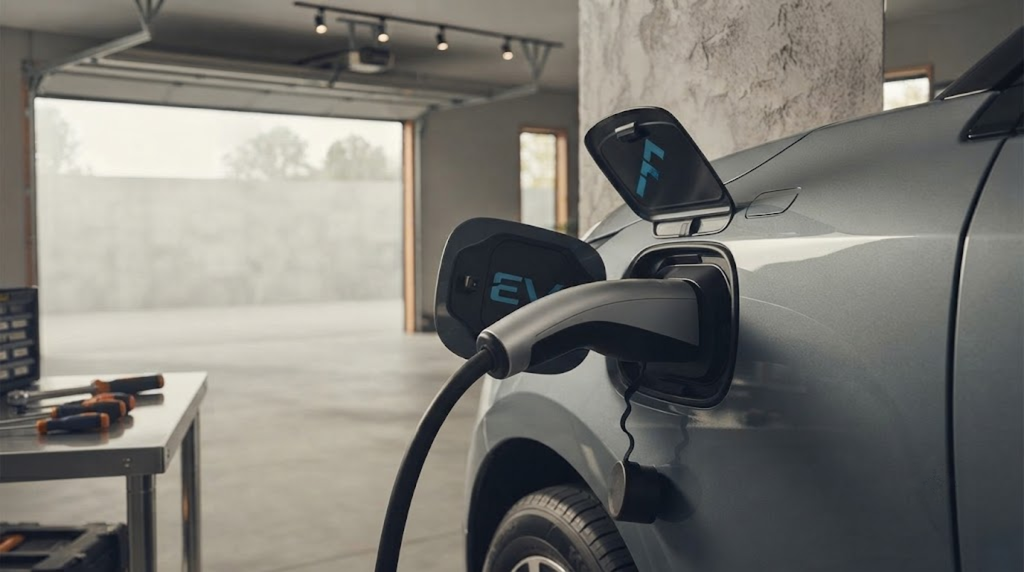
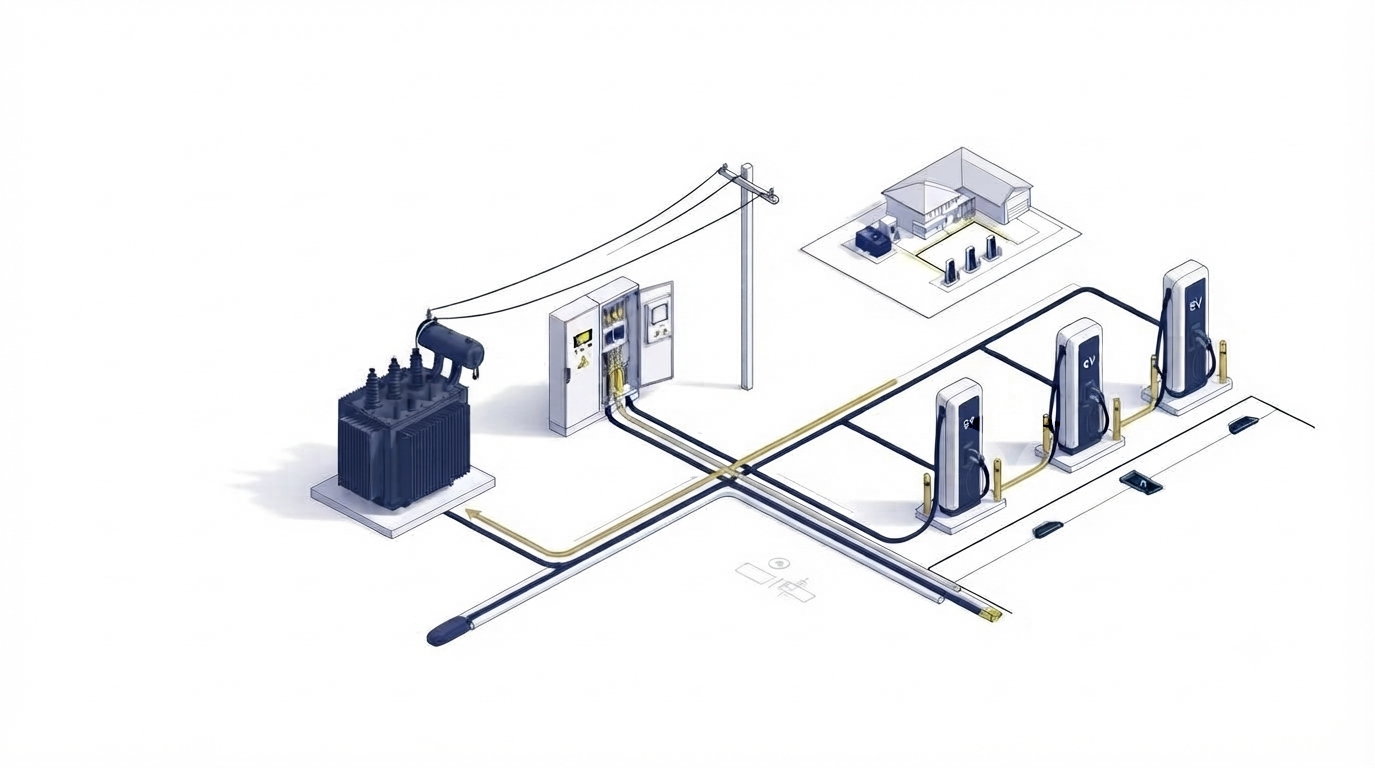
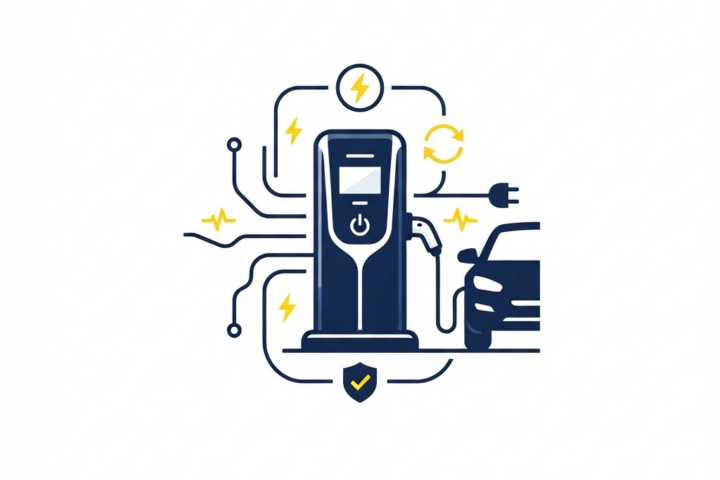
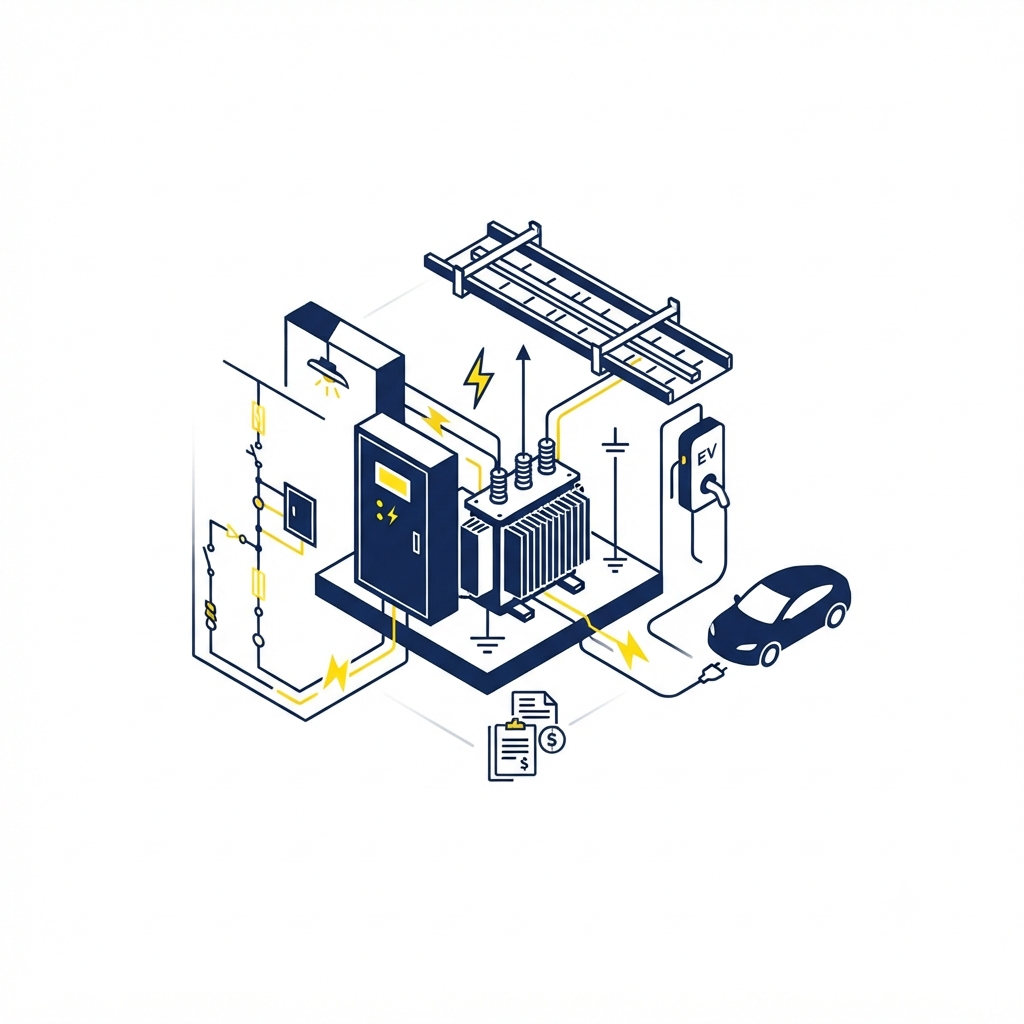
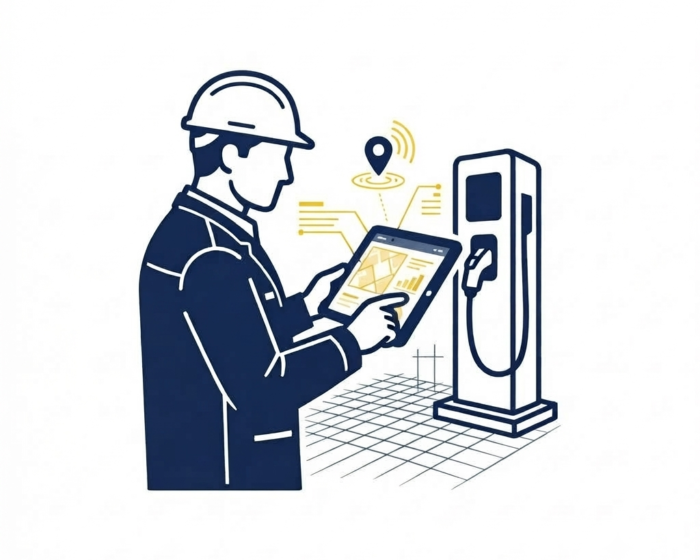
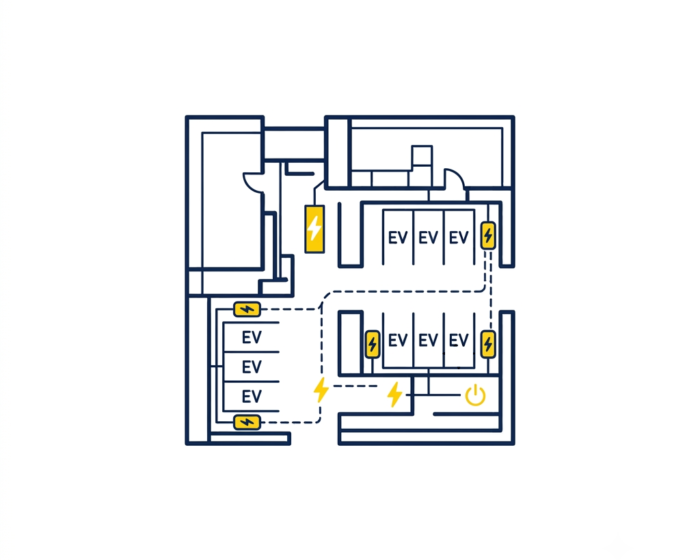
EV charging infrastructure can significantly impact a property’s electrical demand. Our engineering team evaluates the expected charging load and develops the required load calculations, demand assessment, transformer requirements, distribution infrastructure, cable sizing and electrical layouts. The objective is to ensure that the charging system is designed around the site’s actual power infrastructure rather than simply selecting chargers based on their rated capacity.
An EV charging station is no longer just a charger connected to an electrical supply. It is an integrated infrastructure ecosystem involving:
EVSE + HT/LT Infrastructure + Power Distribution + Civil Works + Architecture + MEP + ICT + Mobility + Safety + Energy Management + Operations
Our engineering approach brings these disciplines together under one coordinated design framework.
The result is an EVCS that is:
India’s 2024 EV charging infrastructure guidelines explicitly recognise EVCI as a network comprising EVSE, grid connection, metering, power management, communications, civil infrastructure, and related systems—not merely the charger itself. (Ministry of Power, Government of India)
The charger is only one component of the syste
Our EVCS engineering integrates the selected EVSE architecture with the complete site infrastructure.
We coordinate:
India’s current framework is technology-agnostic and incorporates Indian and international charging standards. BIS also maintains standards covering areas such as conductive charging systems and ISO 15118 vehicle-to-grid communication interfaces. (Power Ministry of India)
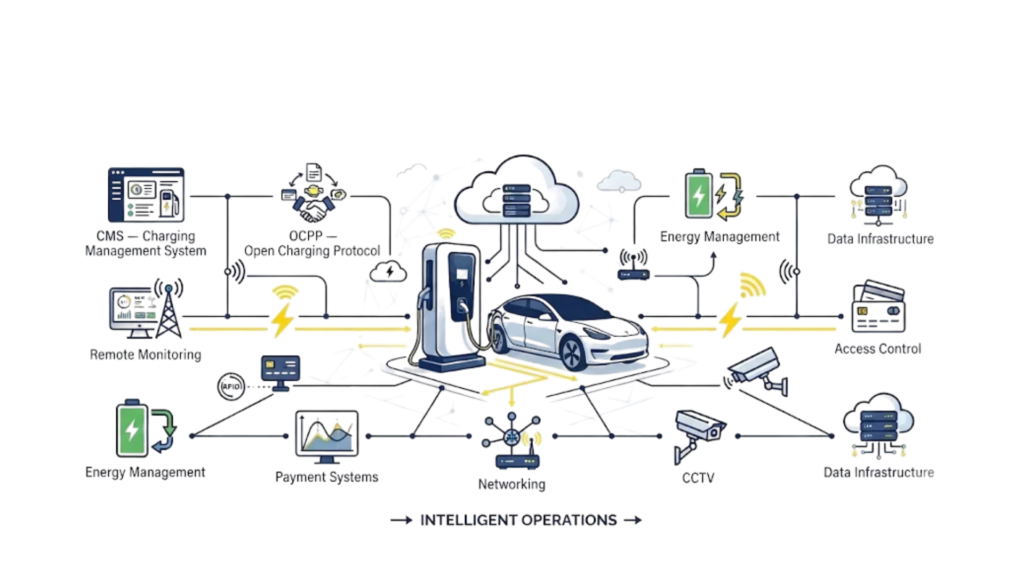
Charging infrastructure is becoming an intelligent energy asset.
We design the physical infrastructure to accommodate digital and operational systems such as:
CMS | OCPP | Remote Monitoring | Energy Management | Load Management | Payment Systems | Networking | CCTV | Access Control | Data Infrastructure
Open communication protocols such as OCPP and OCPI are recognised within India’s EV charging infrastructure framework for interoperability and digital connectivity.
Our design philosophy therefore considers digital infrastructure from day one, rather than attempting to retrofit it after construction.
Truck corridor layout for Indian OEM — 300 km span
Bus depot charging infra — Tier-1 logistics fleet
SE Asia deployment — EVSE infra rollout
EV-ready township basements — Premium RWA clients
Port electrification — Western India 4W fleet hub
Our design approach is built around the specific operational requirements of electric mobility.
We design with construction, commissioning and O&M realities in mind.
We create repeatable design frameworks for multi-site and national rollouts.
Design is developed around the required operational outcome rather than being restricted to one EVSE technology.
Our infrastructure planning considers expansion, higher charging loads, renewable energy, BESS and smart energy management.
Indian engineering practicality combined with global design and documentation standards.
Copyright©2026, Envo Sustainer Pvt Ltd, All Rights Reserved.
Adding {{itemName}} to cart
Added {{itemName}} to cart